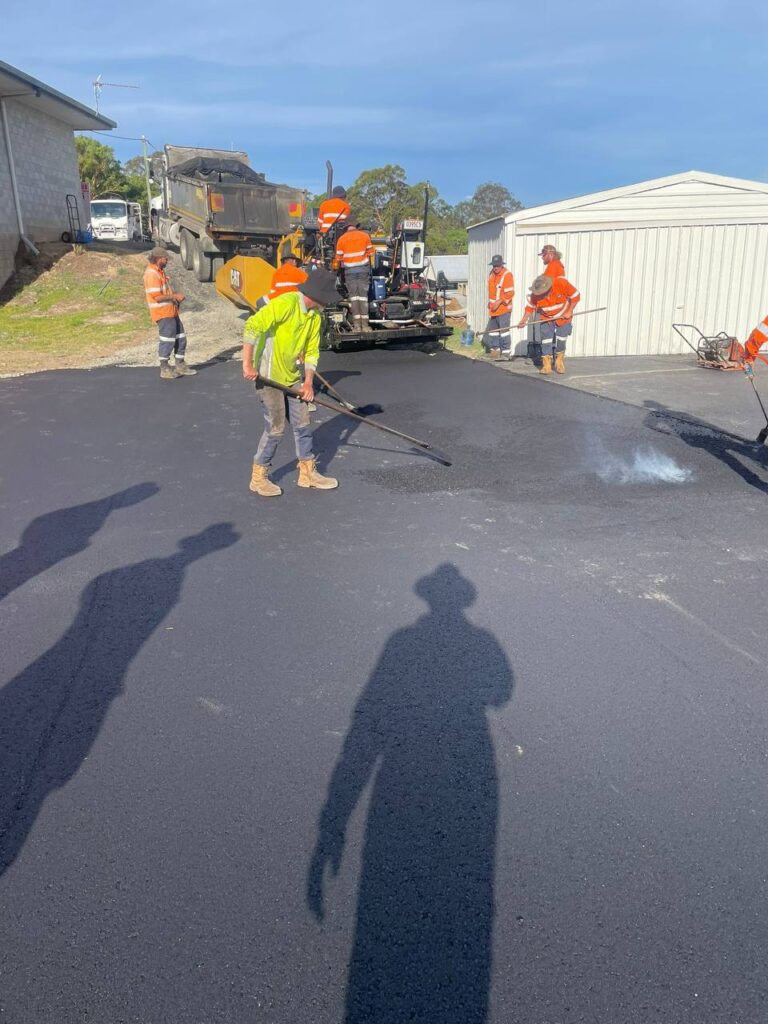
Asphalt surfaces are designed to withstand regular traffic and ongoing exposure to the elements, but they do not remain in their original condition indefinitely. Years of vehicle movements, rainfall, surface wear and general ageing can eventually leave asphalt looking tired, rough or cracked. The important question is whether the pavement needs complete reconstruction or whether resurfacing could restore its performance.
When the underlying pavement remains structurally sound, asphalt resurfacing can provide an effective way to renew a worn surface and extend its useful life. At Strathpine Surfacing Solutions, we provide professional asphalt and bitumen resurfacing throughout Strathpine, QLD, assessing existing pavement carefully before recommending the most appropriate approach.
What Does Asphalt Resurfacing Involve?
Asphalt resurfacing involves preparing an existing pavement and installing a new asphalt layer over it. The existing surface is retained as part of the pavement structure rather than removing and rebuilding the entire area from the ground up.
However, resurfacing is not simply a matter of covering old asphalt. Preparation is critical. Existing defects need to be assessed and suitable repairs completed so the new layer is placed over a stable surface.
Depending on the condition of the pavement, preparation may include repairing potholes, treating damaged sections, correcting irregularities and ensuring that drainage is functioning effectively.
When Is Worn Asphalt Suitable for Resurfacing?
The condition beneath the visible surface is one of the most important factors.
An asphalt surface may look heavily weathered while still having a stable underlying base. In these circumstances, resurfacing can renew the upper pavement without unnecessary reconstruction.
Potential signs that resurfacing could be appropriate include:
- General surface ageing
- A rough or weathered appearance
- Minor to moderate cracking
- Localised areas of deterioration
- Loss of surface consistency
- Minor irregularities
- An underlying pavement that remains structurally stable
A professional assessment helps distinguish ordinary surface deterioration from problems originating deeper within the pavement.
Resurfacing Can Restore a Smooth, Consistent Surface
As asphalt deteriorates, the surface can gradually become rougher and less consistent. Minor depressions, worn sections and previous repair areas can all affect how vehicles travel across the pavement.
Resurfacing creates a renewed wearing course across the prepared area, providing a more uniform finish.
For frequently used asphalt surfaces in Strathpine, this can improve vehicle movement while restoring a cleaner and more functional pavement.
Cracking Does Not Always Mean Reconstruction Is Necessary
Seeing cracks across an asphalt surface can lead property owners to assume that the entire pavement has failed. This is not necessarily the case.
Some cracking is associated primarily with ageing and deterioration of the upper asphalt layer. If the base remains stable, appropriate crack treatment followed by resurfacing may be a suitable solution.
The cause of the cracking still needs to be established. Cracks caused by significant movement or foundation failure cannot simply be covered and expected to disappear permanently.
Professional inspection is therefore an important part of deciding whether resurfacing is appropriate.
Existing Potholes Need to Be Addressed First
Potholes are another defect that should be properly treated before resurfacing.
Placing new asphalt directly over a weak or deteriorated pothole does not correct the damaged material underneath. The unstable section may continue moving under traffic, eventually affecting the new surface.
Suitable pothole repairs should address the failed pavement and create a stable area before the resurfacing layer is installed.
This preparation helps the renewed pavement perform as a complete structure rather than simply hiding existing defects.
Drainage Is Essential to a Successful Result
Water can have a significant effect on asphalt performance. Cracks and damaged areas provide pathways through which moisture can reach the supporting pavement layers.
If the surface also contains depressions where water collects, deterioration may accelerate.
Before resurfacing, it is therefore important to consider:
- Existing surface levels
- Areas of standing water
- Drainage paths
- Low or sunken sections
- Signs of moisture-related deterioration
Where appropriate, correcting surface levels as part of the resurfacing process can help water move away more effectively and protect the renewed pavement.
Resurfacing Can Extend the Useful Life of Existing Asphalt
One of the main advantages of resurfacing is that it makes use of pavement that still has structural value.
If the foundation and significant parts of the existing pavement remain serviceable, installing a properly prepared new wearing layer can help protect those layers and extend the period for which the surface remains functional.
This makes timely assessment important. Resurfacing is generally most effective before deterioration progresses into widespread structural failure.
Waiting until large areas have become unstable can significantly reduce the suitability of the existing pavement for resurfacing.
When Resurfacing May Not Be Enough
Not every worn asphalt surface is a suitable candidate. Sometimes deterioration visible at the surface is the result of deeper structural problems.
Warning signs can include:
- Severe interconnected cracking
- Large sunken sections
- Extensive rutting
- Repeated pothole formation
- Significant pavement movement
- Widespread base failure
- Persistent drainage-related deterioration
In these circumstances, installing another asphalt layer without correcting the underlying weakness may only conceal the problem temporarily.
Failed sections may need to be reconstructed or repaired before any wider resurfacing work is undertaken.
Why Preparation Makes Such a Difference
The performance of resurfaced asphalt depends heavily on the condition of the pavement underneath it.
Professional preparation ensures that obvious weaknesses are not simply trapped beneath a new surface. It also helps create the appropriate conditions for the new asphalt layer to bond and perform effectively.
A thorough approach may involve assessing the base, repairing damaged areas, cleaning and preparing the existing surface, correcting levels where required and ensuring suitable compaction during installation.
The quality of this preparation can make a considerable difference to the finished pavement.
Do Not Wait Until the Surface Has Completely Failed
There is often a useful window between the first signs of significant asphalt ageing and serious structural deterioration.
Property owners should consider having their pavement assessed when they notice increasing cracking, surface roughness, isolated potholes, minor depressions or general deterioration.
Taking action during this stage can provide more options for maintaining the pavement.
If defects are repeatedly ignored, moisture and traffic can continue affecting weakened sections until more substantial repairs become necessary.
Professional Asphalt Resurfacing in Strathpine, QLD
Determining whether asphalt should be repaired, resurfaced or more extensively reconstructed requires an understanding of the complete pavement rather than its appearance alone.
At Strathpine Surfacing Solutions, we assess worn asphalt surfaces throughout Strathpine, QLD, considering existing damage, pavement stability, drainage and the intended use of the area before recommending suitable work.
Our approach focuses on proper preparation and professional installation so that resurfacing is carried out where it provides an appropriate solution for the condition of the existing pavement.
Conclusion
Resurfacing can give worn asphalt a valuable new lease of life when deterioration is mainly affecting the surface and the underlying pavement remains structurally suitable. It can restore a smoother and more consistent finish, address general surface ageing and extend the useful life of an existing asphalt area.
The key is determining whether the pavement is genuinely suitable for resurfacing rather than simply covering defects that originate deeper within the structure.
If your asphalt surface in Strathpine, QLD is becoming cracked, rough or generally worn, contact Strathpine Surfacing Solutions. We can assess its condition and recommend an appropriate repair or resurfacing solution based on what the pavement actually needs.
Call us on: 07 3113 9873
Click here to find out more about Strathpine Surfacing Solutions
Click here to complete our contact form and see how we can help with your surfacing needs.