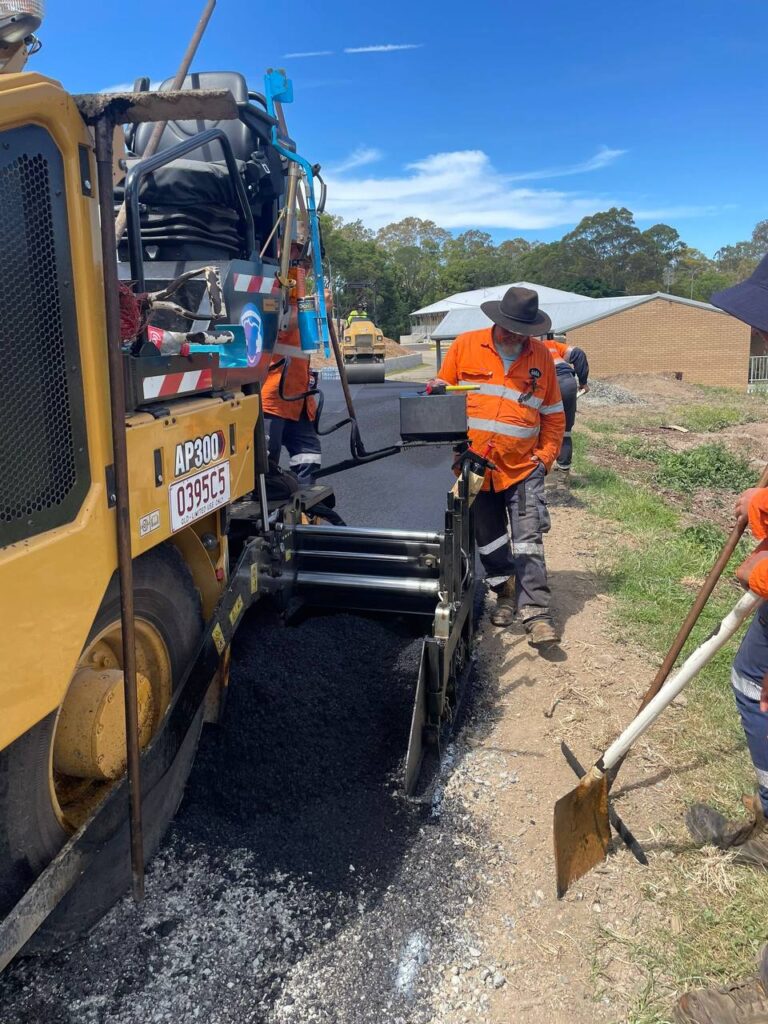
A well-maintained road provides more than a smooth surface for vehicles. Its condition affects drainage, accessibility, vehicle movement and the long-term performance of the pavement. When an unsealed road becomes uneven, develops potholes or begins collecting water, professional road grading can help restore its condition and prevent further deterioration.
Road grading involves reshaping and levelling the existing surface to establish a more consistent profile. However, effective grading is not simply about removing bumps and filling depressions. It also involves managing drainage, correcting surface irregularities and preparing the pavement to withstand regular traffic.
For property owners and businesses in Strathpine, QLD, professional grading can be an important part of maintaining driveways, access roads, service routes and other unsealed trafficable surfaces.
At Strathpine Surfacing Solutions, we provide professional road grading and surfacing services focused on improving the condition, functionality and long-term performance of existing pavements.
Why Is Professional Road Grading Important?
Unsealed roads are constantly exposed to vehicle movements, rainfall and environmental conditions. Over time, these factors can cause the surface to lose its original shape.
Wheel ruts may develop along frequently travelled sections, while loose material can accumulate along the edges. Potholes, corrugations and depressions may also form as the surface deteriorates.
Professional road grading helps correct these problems by restoring the pavement profile and redistributing suitable material.
When carried out with appropriate preparation and compaction, grading can improve everyday access and help the existing pavement perform more consistently.
1. Creates a Smoother and More Consistent Road Surface
One of the most noticeable benefits of professional road grading is the improvement in surface smoothness.
Unsealed roads can gradually develop bumps, ridges and depressions that make vehicle movements uncomfortable and inconsistent.
Grading equipment can reshape the existing surface, reducing irregularities and restoring a more uniform travelling area.
This is particularly beneficial for access roads and driveways used regularly by vehicles.
A smoother surface also helps reduce concentrated stress on individual sections of pavement, although the long-term result depends on the condition of the underlying materials.
2. Improves Drainage and Reduces Water Pooling
Effective drainage is one of the most important factors influencing road performance.
When an unsealed surface becomes uneven, rainfall can collect in wheel ruts, potholes and low areas. Water may then soften the supporting materials, making the pavement more vulnerable to further deterioration.
Professional grading can restore appropriate surface falls and help direct water away from trafficable areas.
This can reduce the likelihood of:
- Persistent water pooling
- Soft and unstable sections
- Surface erosion
- Deepening wheel ruts
- Recurring potholes
- Material being washed away
Where drainage problems extend beyond the road surface, additional improvements may be necessary.
3. Helps Prevent Potholes From Becoming More Severe
Potholes often begin as relatively small depressions before gradually expanding under traffic.
As vehicles pass over the damaged area, loose material can be displaced. Rainfall may collect inside the depression, weakening the surrounding pavement and accelerating deterioration.
Professional grading can help restore pothole-affected areas before the damage becomes more extensive.
However, severely damaged sections may require additional preparation and suitable replacement material.
Simply pushing loose material into a pothole without addressing instability underneath may allow the problem to return.
4. Corrects Wheel Ruts and Surface Deformation
Wheel ruts develop when repeated vehicle movements displace or deform pavement material along frequently travelled paths.
These depressions can become increasingly pronounced, particularly where heavier vehicles use the same sections regularly.
Professional grading can reshape affected areas and restore a more consistent road profile.
Where the existing material remains suitable, it may be redistributed and compacted to improve stability.
If rutting is caused by weak supporting layers, additional pavement preparation may be required to prevent the same deformation from developing again.
5. Reduces Corrugations and Uneven Ridging
Corrugations are repeated ridges that can form across unsealed roads.
They are often associated with vehicle movements and instability within the upper pavement material.
These irregularities can make driving uncomfortable and contribute to further displacement of loose aggregate.
Professional grading can remove existing corrugations and restore a smoother travelling surface.
For longer-term improvement, the condition of the pavement material and the effectiveness of compaction should also be considered.
6. Helps Maintain Consistent Vehicle Access
An uneven or deteriorating road can make everyday vehicle access increasingly difficult.
Deep potholes, ruts and loose material can affect how comfortably vehicles travel across the surface, particularly during wet conditions.
Professional grading can improve the road profile and reduce irregularities that interfere with normal vehicle movements.
This is valuable for residential driveways, commercial access roads and other areas that need to remain consistently trafficable.
The objective is to maintain a surface suited to its intended use rather than allowing deterioration to progressively restrict access.
7. Redistributes Suitable Pavement Material
Over time, traffic and rainfall can move road material away from heavily used sections.
Aggregate may accumulate along the edges while wheel paths become increasingly thin or uneven.
Professional grading can redistribute suitable existing material across the pavement, helping restore a more consistent profile.
However, grading cannot replace material that has already been lost through erosion or prolonged deterioration.
Where insufficient suitable material remains, additional road base or other appropriate pavement material may be required before the surface can be effectively restored.
8. Supports Better Pavement Compaction
Grading and compaction are closely connected.
While grading establishes the required road shape, compaction helps consolidate suitable pavement material so it can support vehicle movements more effectively.
Without adequate compaction, freshly graded material may remain loose and become displaced under traffic.
This can allow wheel ruts, corrugations and depressions to develop again.
Professional grading carried out alongside appropriate compaction helps create a more stable surface and supports better long-term performance.
9. Helps Reduce Surface Erosion
Erosion can become a significant problem on unsealed roads where rainfall flows across poorly shaped surfaces.
Water may follow existing wheel ruts or depressions, gradually carrying loose material away.
As erosion continues, the road can become increasingly uneven and difficult to maintain.
Professional grading can restore an appropriate surface profile and help direct water away from vulnerable areas.
Where erosion has already removed substantial material, additional preparation may be needed.
Addressing the drainage conditions contributing to erosion is important for preventing repeated deterioration.
10. Supports the Long-Term Performance of Existing Roads
One of the main advantages of professional grading is its role in preventative pavement maintenance.
Minor irregularities can gradually develop into more extensive defects when left untreated.
By correcting developing ruts, potholes and drainage problems, grading can help preserve the condition of an existing unsealed road.
This does not mean that grading will prevent every future defect.
Traffic demands, rainfall, material quality and the condition of the supporting layers will continue influencing pavement performance.
However, appropriate grading can reduce avoidable deterioration and help maintain a more dependable trafficable surface.
11. Prepares Roads for Further Surfacing Work
Professional grading is also an important part of preparing roads for additional pavement treatments.
Before an unsealed surface can receive a suitable bitumen treatment, the underlying pavement needs to have an appropriate profile and sufficient stability.
Existing potholes, wheel ruts and drainage problems should be addressed before a new wearing surface is installed.
Grading helps establish the required levels and surface shape, while compaction supports the stability of the prepared pavement.
For roads being considered for spray & seal bitumen, professional preparation is particularly important because the finished treatment relies on the condition of the supporting pavement.
12. Helps Identify Underlying Pavement Problems
Professional grading work can also reveal issues that require more than surface reshaping.
For example, a road that develops deep ruts shortly after grading may have insufficient supporting strength.
Repeated pothole formation may indicate drainage problems or unstable pavement material.
Other warning signs include:
- Persistent soft areas
- Significant material loss
- Repeated washouts
- Deep settlement
- Extensive erosion
- Recurring deformation under traffic
Identifying these problems allows more appropriate pavement repairs or rehabilitation to be considered.
This is important because repeatedly grading a structurally unstable road may provide only temporary improvement.
When Should You Arrange Professional Road Grading?
There is no single maintenance interval suitable for every unsealed road.
The appropriate timing depends on how frequently the road is used, the types of vehicles travelling over it, the condition of the pavement material and its exposure to rainfall.
Professional grading may be worth considering when:
- Wheel ruts are becoming increasingly noticeable
- Potholes are appearing across several sections
- Corrugations are affecting driving comfort
- Water regularly collects on the surface
- Loose material is accumulating along the edges
- The road has become uneven or difficult to use
- Previous grading work is no longer maintaining the required profile
Arranging an assessment before deterioration becomes severe can help determine whether grading alone will be sufficient.
Why Professional Grading Is Better Than Simply Levelling the Surface
A road can appear smooth immediately after grading while still containing problems that affect its long-term performance.
If the surface has been flattened without establishing appropriate drainage, water may continue collecting in vulnerable areas.
Likewise, loose material may quickly become displaced if the pavement has not been properly prepared and compacted.
Professional grading considers more than appearance.
The existing pavement profile, drainage requirements, material condition and expected traffic loads all influence how the work should be carried out.
At Strathpine Surfacing Solutions, we assess unsealed roads, driveways and trafficable areas throughout Strathpine, QLD to determine the grading and preparation required for their condition and intended use.
Our focus is on restoring a practical surface that performs reliably rather than simply creating a temporary visual improvement.
Can Professional Grading Restore a Badly Neglected Road?
In many cases, professional grading can significantly improve an unsealed road that has received limited maintenance.
Deep ruts, uneven sections and corrugations may be corrected through appropriate reshaping and preparation.
However, the condition of the existing pavement determines how much restoration is possible.
If the road has lost substantial material, developed widespread foundation instability or experienced severe erosion, additional work may be necessary.
This could involve incorporating suitable pavement material, correcting drainage or rebuilding failed sections before final grading and compaction.
A professional assessment helps establish the most appropriate approach.
Conclusion
Professional road grading provides several important benefits, including smoother vehicle access, improved drainage, reduced pothole development, correction of wheel ruts and better management of loose pavement material.
When combined with appropriate preparation and compaction, grading can also help reduce erosion, preserve existing roads and prepare surfaces for further asphalt or bitumen treatments.
The greatest benefit comes from addressing the conditions responsible for deterioration rather than simply smoothing visible irregularities.
If your driveway, access road or unsealed trafficable surface in Strathpine, QLD has become uneven, rutted or difficult to maintain, Strathpine Surfacing Solutions can assess its condition and recommend an appropriate grading or surfacing solution.
Contact our team to discuss professional road grading and pavement preparation focused on improving everyday access and supporting reliable long-term surface performance.
Call us on: 07 3113 9873
Click here to find out more about Strathpine Surfacing Solutions
Click here to complete our contact form and see how we can help with your surfacing needs.